We start the process by collecting diverse active local soil biology from areas with diverse vegetation that have not been sprayed with industrial chemicals. This provides the natural diversity of soil biology that we grow in the BioBooster.
The Collection Area
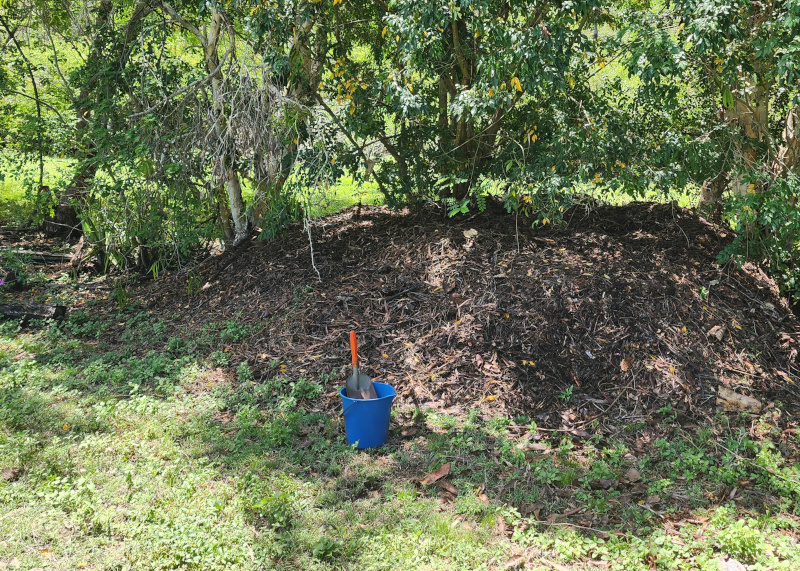
A good understanding of what we are looking for is essential for picking the collection site. The bare minimum standard requires that your site is free from industrial chemicals, both directly applied and from spray drift. The site must not be exposed to direct sunlight and should have mixed vegetation.
The ideal site is local and is filled with a dense mix of different trees, bushes and small plants. Focus on the edges of environments where there are plenty of pioneer plants, in these areas we see some of the most diverse soil biology. If possible, collect and mix the soil from multiple sites.
A bush turkey nest is a good source of a healthy and active soil biology, as they rely on it to hatch their eggs. A bush turkey’s nest contains soil from up to thirty meters away. We recommend checking out creek banks as they have many different plant species.
Collecting your soil
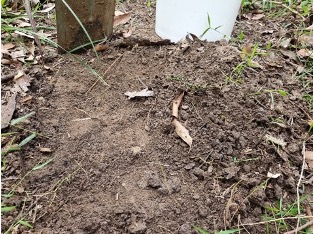
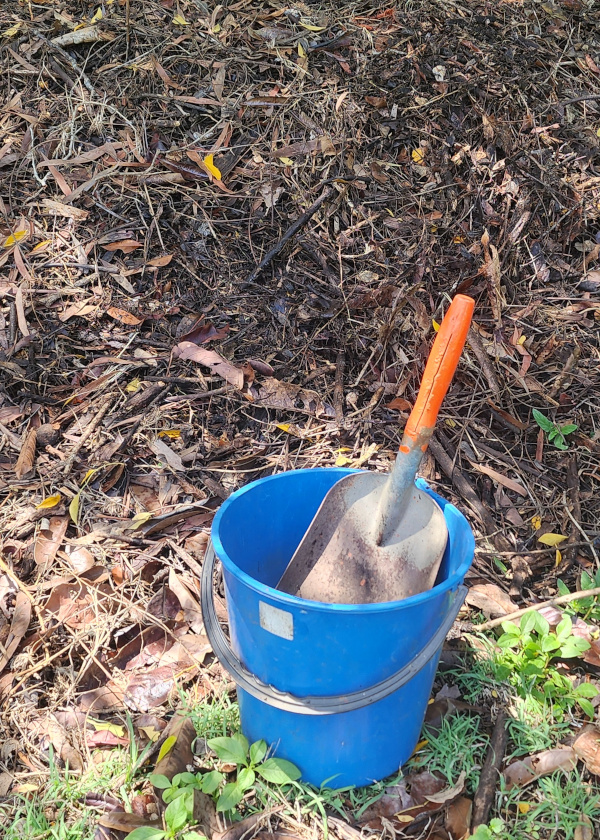
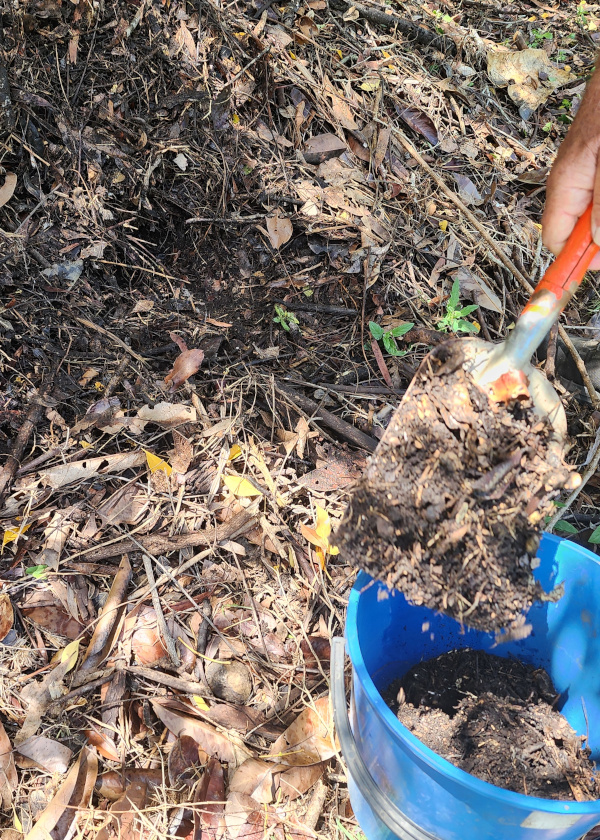
Push aside the layer of dead leaves and sticks and collect the top 1 to 2cm soil, which is the layer where the biology is most active.
For small areas, collect one litre. For large areas, we want to collect at least five litres and take samples from several different places.
Sifting your Soil
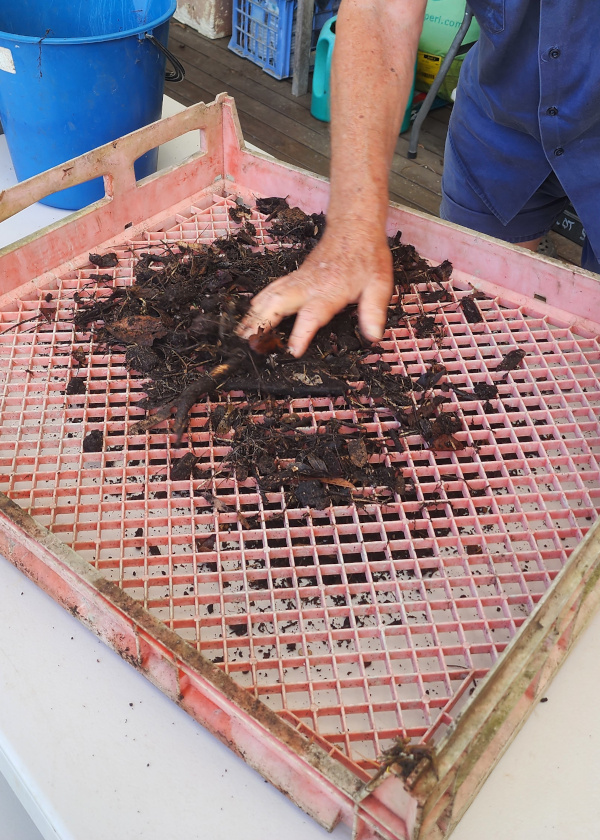
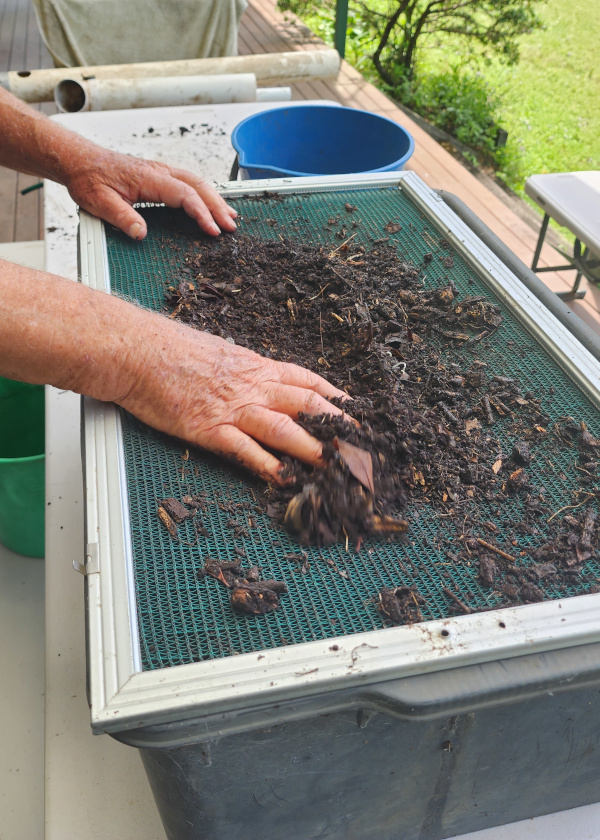
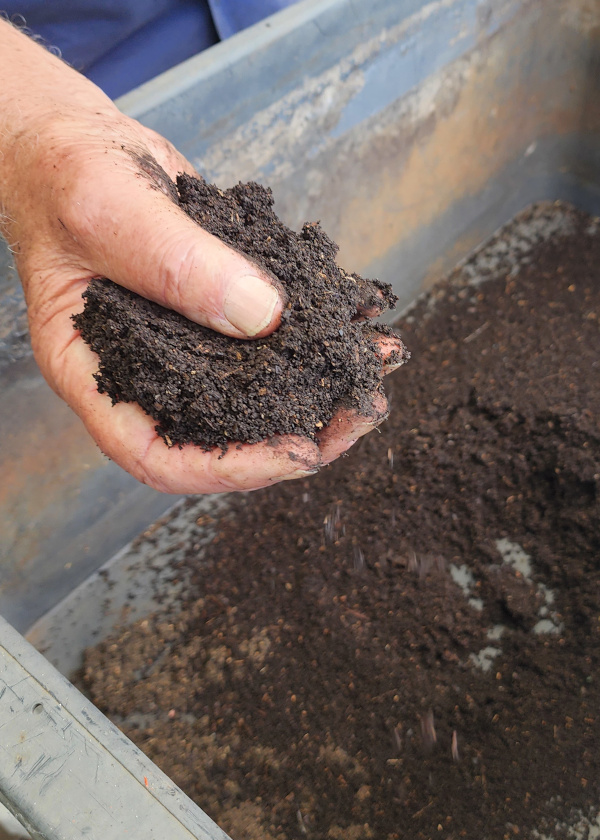
Thoroughly mix the samples and use a large coarse mesh to remove the bulk of sticks and stones. A finer mesh, ours is made from 30% shade cloth, removes the remaining debris.
The resulting soil is fine, soft and full of dormant microbiology.
Store in a cool place, protected from sunlight and rain.
Next Steps
The next step is making a starter – check out our guides on building a starter for small areas, or building a starter for large areas.